
In a free seminar for Safeguarding Adults Week Sports Ethicist Emma Thomas shared insights from her research
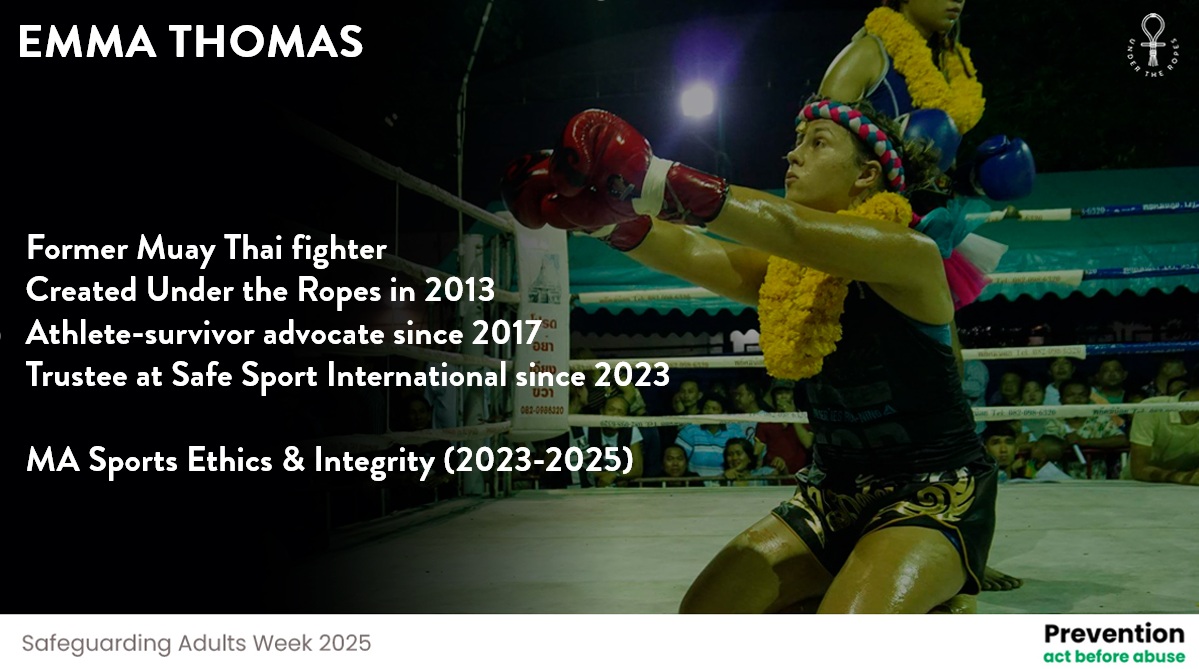
Emma Thomas is a sports ethicist specialising in safeguarding in Muay Thai, and a trustee board member at Safe Sport International.
She’s also the founder of Under the Ropes, an online platform promoting safe and inclusive cultures in Muay Thai, with a focus on eliminating gender-based violence.
After experiencing sexual violence from a coach during her fighting career as an athlete, Emma became a vocal advocate, using her story to create awareness. She now helps other survivors access resources for support.
She recently completed her master’s degree in Sports Ethics & Integrity. For her thesis, she conducted the world’s first study on women’s experiences of sexual harassment and abuse in Muay Thai. This involved interviewing survivors and analysing various organisations’ safeguarding policies.
Emma’s study examines the roles that interpersonal, organisational, and societal factors play in survivors’ experiences. She also addresses the power dynamics that are present throughout their experiences. Her findings identified alarming failures by sports authorities to prevent sexual violence. She also identified cultural factors that perpetuate the issue, and broader social factors that need to be addressed.
This seminar drew from Emma’s research to illustrate the importance of a holistic, collaborative and multi-layered approach to the prevention of abuse in sport. Emma discussed how we can build a culture that has survivors’ wellbeing at its heart.
You can download some slides from this presentation below, Click on the images to access larger versions:
Tackling the Issue At a Societal Level
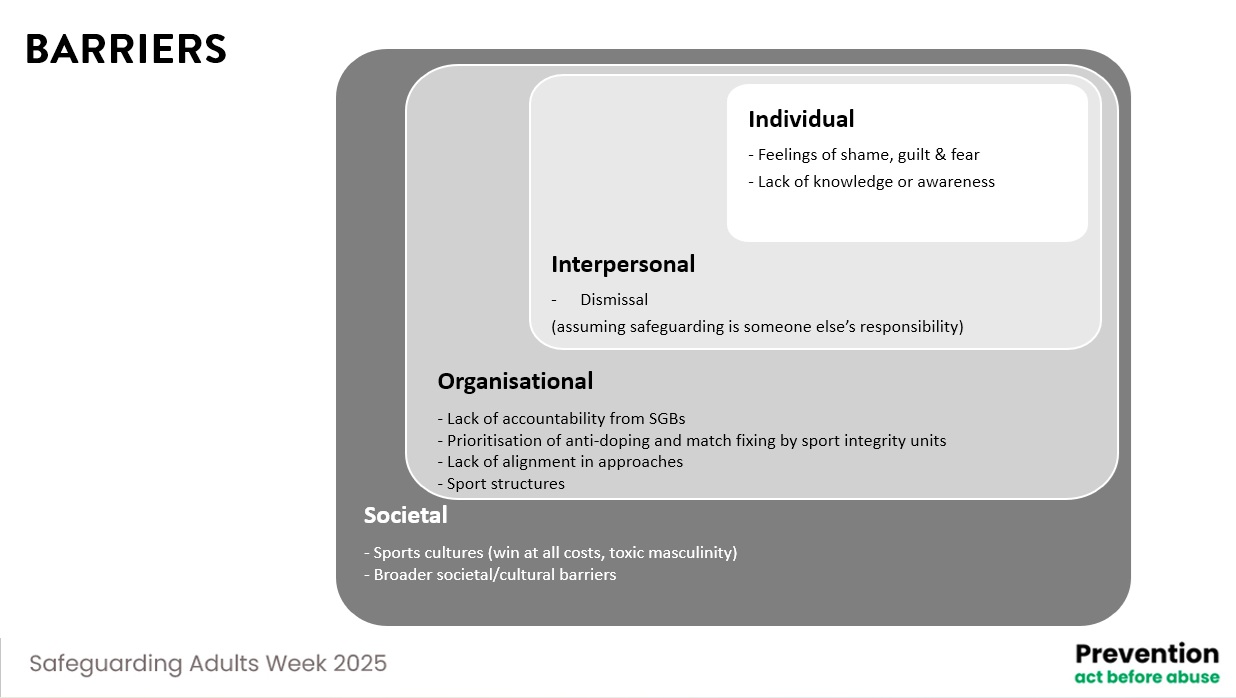
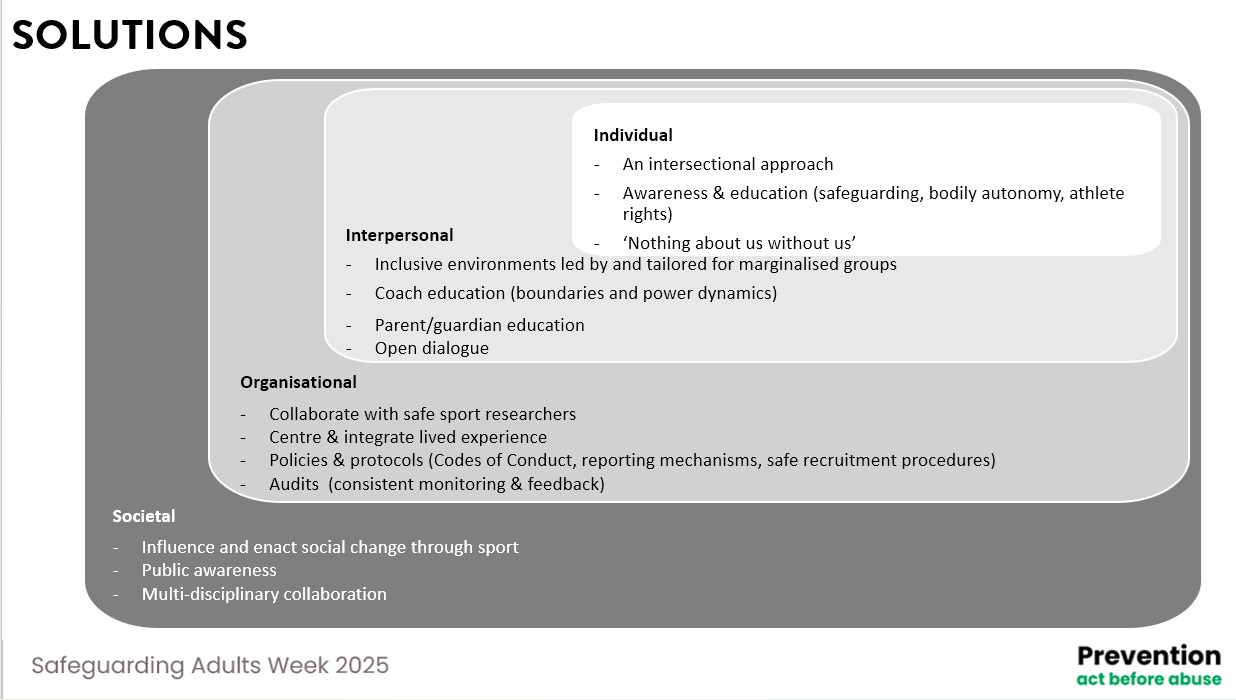
Emma used the socio-ecological model to show how everyone has a role to play in preventing abuse against adults in sport. She discussed both barriers and solutions on individual, interpersonal, organisational and societal levels. In particular, she emphasised the importance of tackling this issue on a societal level:
Negative sports cultures such as ‘win at all costs’ mentalities and toxic masculinities create societal barriers to preventing abuse. These ideologies are often viewed as required for sporting success, and this normalisation creates resistance not only to change, but even to accepting there’s a problem.
When I spoke out about being sexually assaulted by a coach, this showed up as typical victim-blaming responses, and I was told that if I wanted to go into what was perceived to be a ‘men’s sport’, then this is what I should expect. It was almost as if I had no right to complain about it.
These responses aren’t limited to sport. It goes beyond sport into a broader societal issue, with the way we view sexual violence and people who come forward about their experiences, and also rigid gender norms.
That’s why we have to tackle these issues on a cultural level. Sport has an unprecedented social power, which creates an opportunity to feed into wider social change. This can look like reducing stigma and victim blaming, and creating an open dialogue where survivors are heard, and abuse isn’t a shameful thing to talk about. If we get it right in sport, we can set an example for other sectors.
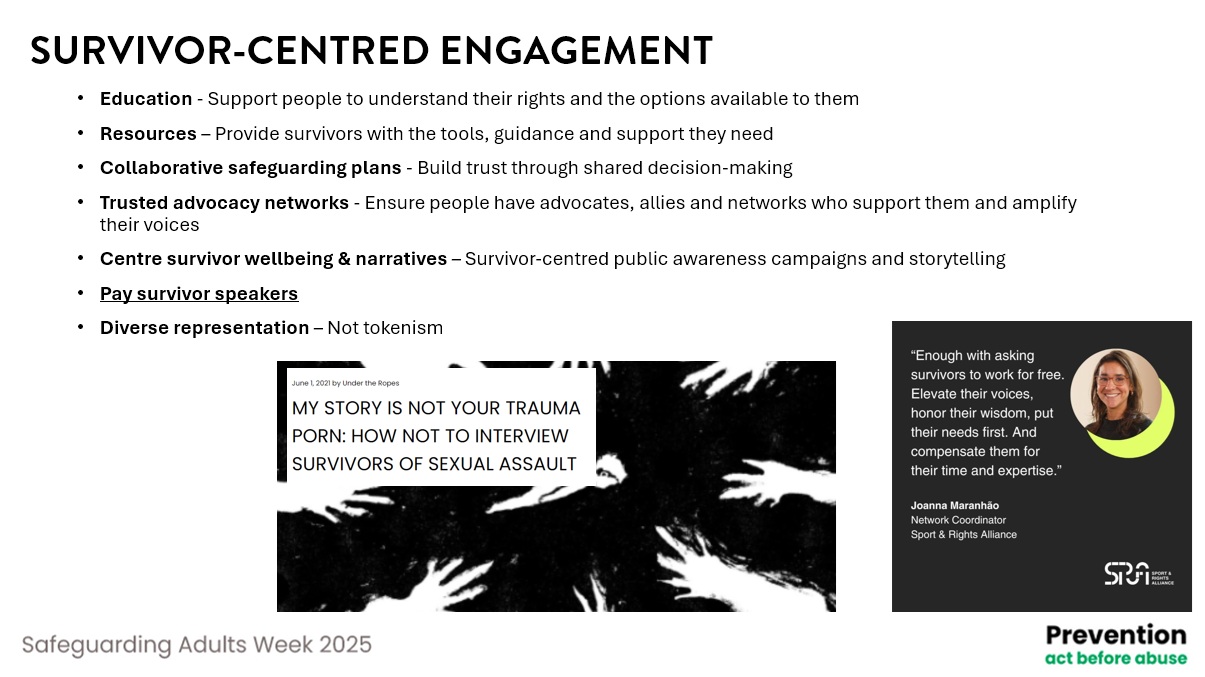
Survivor-Centred Engagement
Emma also discussed how sports organisations can engage with people with lived experience of abuse in a survivor-centred way. She drew from her experience as a survivor and advocate who has contributed to the development of international safe sport frameworks. She also discussed her negative experiences in sharing her story with journalists.
Further Resources
- Eliminating gender-based violence in sport. Emma Thomas on an episode of our Safeguarding Matters podcast.